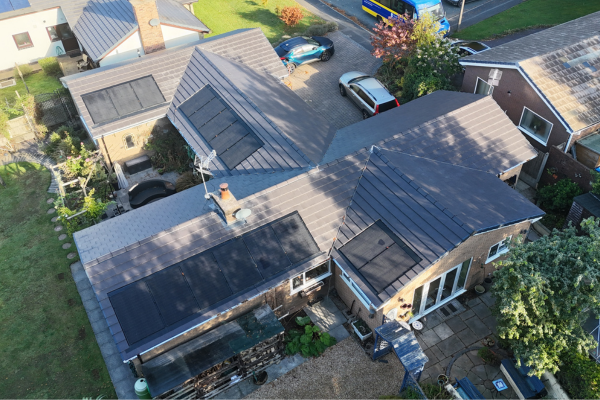
If you’re considering solar panels in Cheshire, you may be wondering whether they generate enough electricity to make them worthwhile in the North West’s climate.
While Cheshire doesn’t enjoy the same sunshine levels as Southern Europe, modern solar panels are designed to generate electricity from daylight rather than direct sunshine, making them a practical option for many homes across the county.
In this guide, we’ll explain how solar panels perform in Cheshire, what affects their output and why many homeowners are choosing solar to reduce their reliance on grid electricity.
Do Solar Panels Work in Cheshire?
Yes. Despite the UK’s reputation for cloudy weather, solar panels can perform well across the country because they generate electricity from daylight rather than direct sunshine alone. This means they continue producing electricity even on overcast days.
Many people are surprised to learn that Germany has developed one of the world’s leading solar markets despite having a climate comparable to the UK. This demonstrates that solar power can be highly effective in northern European climates when systems are designed and installed correctly.
For homeowners in Cheshire, the factors that have the greatest impact on performance include:
- The size of your roof
- The orientation of your roof
- Shading from nearby trees or buildings
- The quality and efficiency of the solar panels
- Whether you choose to add battery storage
Solar Panels Work Even When It’s Cloudy
One of the biggest misconceptions about solar panels is that they only work in bright sunshine.
In reality, solar photovoltaic (PV) panels generate electricity from daylight, which means they continue producing energy even when the sky is overcast. While they generate slightly less electricity on cloudy days than during bright sunshine, modern solar panels are designed to perform efficiently throughout the year in the UK’s climate.
This is why solar panels have become an increasingly popular investment for homeowners across Cheshire and the wider North West.
How Much Electricity Can Solar Panels Generate in Cheshire?
There isn’t a one-size-fits-all answer because every property is different. The amount of electricity a solar system generates depends on roof space, roof orientation, shading, panel efficiency and local weather conditions.
Rather than focusing on a single average figure, every solar installation at Cheshire Solar Services is designed to make the best use of the available roof space. In general, larger systems with more panels will generate more electricity than smaller systems where installation conditions are similar.
Adding a solar battery won’t increase the amount of electricity your solar panels generate, but it can help you make better use of the electricity your system produces and increase financial savings. By storing surplus electricity generated during the day for use in the evening or overnight, battery storage can reduce the amount of electricity you need to import from the grid.
A well-designed solar system can make a significant contribution towards meeting annual electricity needs.
How Much Can Cheshire Homeowners Save?
The amount you could save depends on how much electricity your household uses, when you use it and how much of the electricity your solar panels generate is used within your home. The more of your own solar electricity you use, the less electricity you’ll need to buy from the grid.
Homes that use more electricity during daylight hours, or have a solar battery to store excess electricity for use later, can often make better use of the electricity they generate, helping to maximise the savings from their solar system.
Some energy suppliers also offer specialist tariffs for homes with solar panels and battery storage. Depending on the tariff, these may include lower off-peak electricity prices for charging a battery or enhanced rates for electricity exported back to the grid.
If your energy supplier offers a Smart Export Guarantee (SEG) tariff, you may also receive payments for any surplus electricity your system exports. The amount you receive depends on the tariff you choose and the amount of electricity you export.
So, Are Solar Panels Really Worth It in Cheshire?
For most homeowners, the answer is yes.
Modern solar panels generate electricity throughout the year, even during Cheshire’s cloudier weather. Combined with battery storage, suitable energy tariffs and the Smart Export Guarantee, they can help reduce reliance on the grid and improve long-term energy independence.
Every property is different, which is why the best way to understand the potential benefits is through a no-obligation quote – please do get in touch to arrange this. By considering factors such as roof orientation, shading, available space and household electricity usage, it’s possible to estimate how much electricity a solar system could generate and the savings it may deliver to you over its lifetime.
Frequently Asked Questions
Do solar panels need direct sunlight?
No. Solar panels generate electricity from daylight rather than direct sunshine, which means they continue producing electricity even on cloudy days. Bright sunshine will generally increase output, but it isn’t essential for solar panels to work effectively.
Do I need a south-facing roof?
Not necessarily. South-facing roofs are often considered ideal, but many east-, west- and south-east-facing roofs can also produce excellent results. The suitability of your roof depends on several factors, including its pitch, shading and available space.
Are solar batteries worth it?
A solar battery doesn’t increase the amount of electricity your solar panels generate. Instead, it stores excess electricity produced during the day so it can be used later, helping many households reduce the amount of electricity they buy from the grid.